Attention Deficit Hyperactivity Disorder (ADHD) is one of the most common neurodevelopmental conditions among children in Hong Kong, with significant impact on academic performance, emotional regulation, and social development. While medication remains the mainstream treatment approach, evidence-based research into non-pharmacological interventions in Hong Kong is still in its early stages.
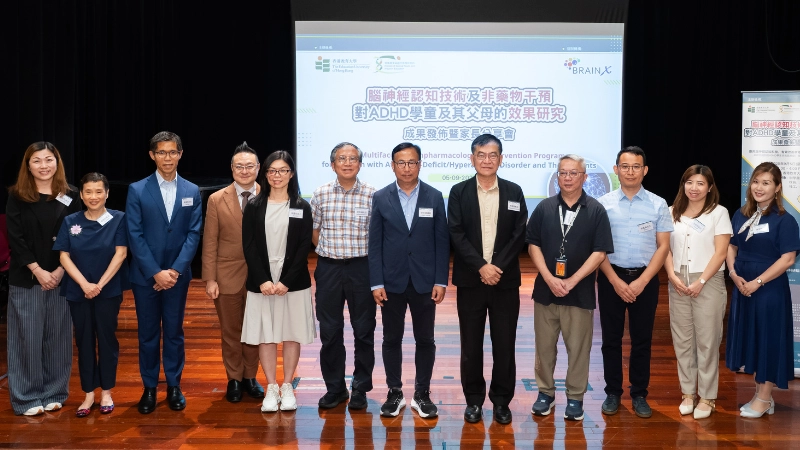
The study on Brain Empowerment: Empowering Minds, Strengthening Families programme was conducted by the Institute of Special Needs and Inclusive Education at The Education University of Hong Kong (EdUHK), in collaboration with BrainX and Healthy Kiddo. Through a rigorous evidence-based research design, the study evaluated the effectiveness of a comprehensive approach that integrates Neurocognitive Training (NCT) with non-pharmacological interventions in improving core ADHD symptoms, family relationships, and parenting efficacy. The findings were officially presented at the EdUHK Research Results Presentation in September 2025, providing an evidence base for advancing inclusive education and mental health support in Hong Kong.
Research Overview
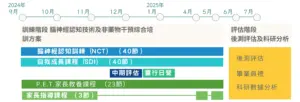
Programme Structure
A total of 56 families participated in the study, divided into two groups:
Attention Assessment — MOXO d-CPT
The study used MOXO d-CPT, a clinically validated attention assessment tool used by physicians in 39 countries as a diagnostic support tool for ADHD. In Group A, pre- and post-intervention comparisons across all four domains — Attentiveness, Timeliness, Impulsiveness, and Hyper-Reactivity — reached p < 0.001, demonstrating that the training produced stable and clinically meaningful improvements.
In Group B, no statistically significant improvements were observed across any of the four domains.
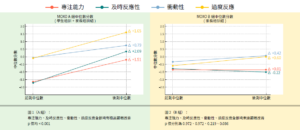
Training progress: In Group A, only modest gains were recorded during the first half of training (sessions 1–20). Significant improvements emerged in the second half (sessions 21–40), particularly in Timeliness, Impulsiveness, and Hyper-Reactivity.
Impact of demographics and comorbidities: Age, gender, ADHD subtype, and comorbidity status (including Autism Spectrum Disorder, dyslexia, intellectual disability, and language disorder) — had no significant effect on training outcomes.
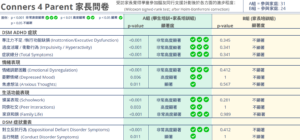
Parent Rating Scale — Conners 4-Parent
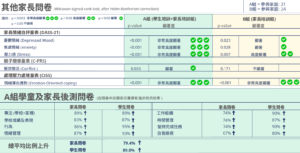
Parents were invited to complete the Conners 4-Parent Rating Scale before and after the programme to assess changes in their child’s behaviour based on observations in daily life. Results showed that all assessed domains reached statistical very highly significance (p < 0.05), with most indicators reached statistical significance (p < 0.001).
This study successfully validates the effectiveness of the Brain Empowerment: Empowering Minds, Strengthening Families programme and provides an evidence base for future inclusive education and mental health policy. The model not only helps schools more effectively support students with ADHD and advance inclusive education, but also alleviates the financial and emotional burden on low-income families, reduces the strain on an overstretched public healthcare system, and contributes to building a more inclusive society in Hong Kong.